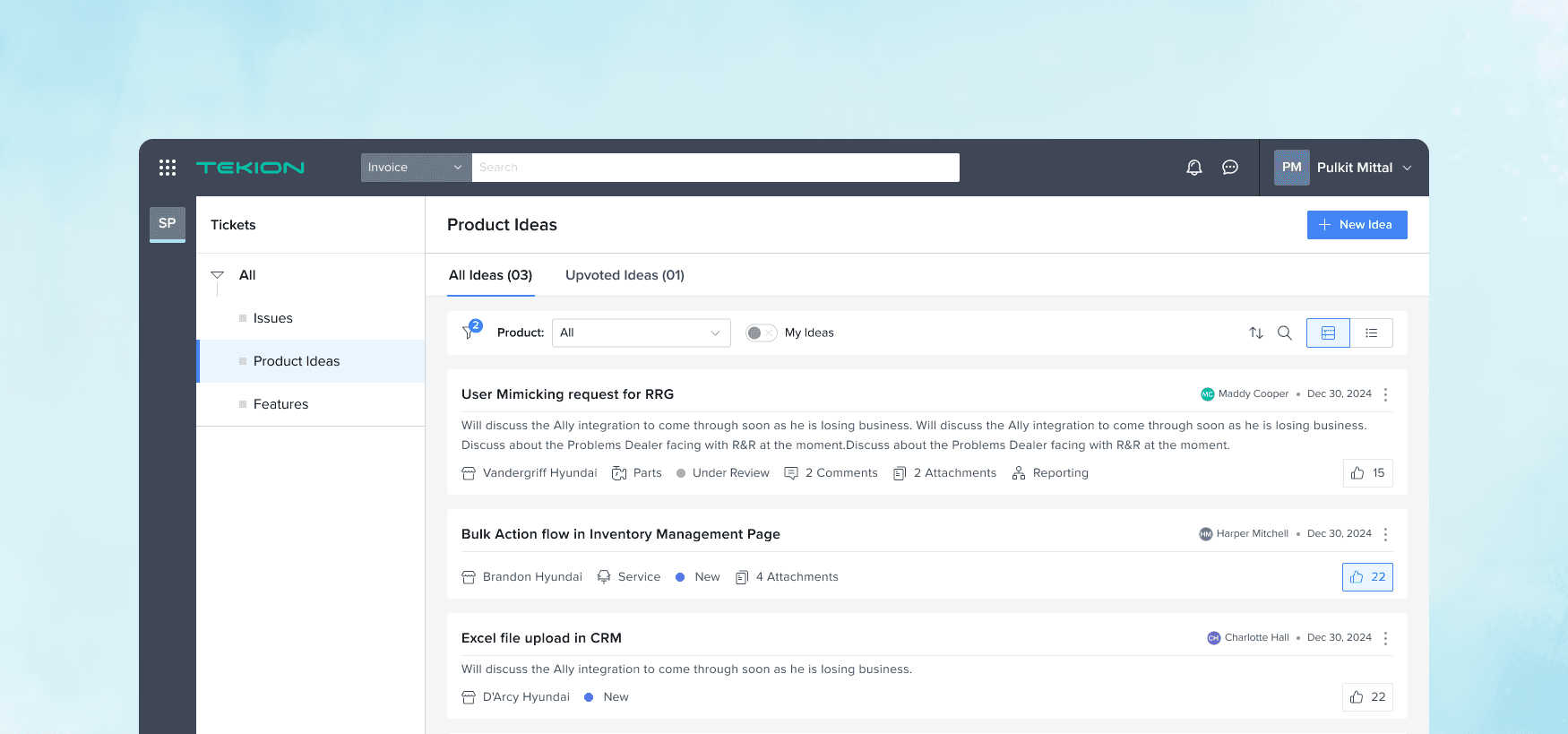
Optimizing Product Development Workflow at Tekion Corp
Optimizing Product Development Workflow at Tekion Corp
Year
2024
Industry
SAAS
Enterprise
Role
UX Strategy
UI Design
With Tekion Corp's rapid growth, an efficient system to manage feature requests and customer feedback became critical.
With Tekion Corp's rapid growth, an efficient system to manage feature requests and customer feedback became critical.
This case study showcases how I designed a solution to improve the product development workflow by bridging the gap between feedback sources and product teams to ensure strategic and customer-driven innovation.
This case study showcases how I designed a solution to improve the product development workflow by bridging the gap between feedback sources and product teams to ensure strategic and customer-driven innovation.
🤔 About Tekion Corp -
🤔 About Tekion Corp -
Tekion provides a cutting-edge SAAS platform designed to transform the automotive dealership experience. By leveraging cloud technology, Tekion helps dealerships streamline their operations, from sales and service to customer relationship management.
Tekion provides a cutting-edge SAAS platform designed to transform the automotive dealership experience. By leveraging cloud technology, Tekion helps dealerships streamline their operations, from sales and service to customer relationship management.
The platform offers end-to-end solutions that enhance efficiency, improve user experience, and enable real-time data management, giving dealerships the tools they need to operate more effectively in today’s digital landscape.
The platform offers end-to-end solutions that enhance efficiency, improve user experience, and enable real-time data management, giving dealerships the tools they need to operate more effectively in today’s digital landscape.
Various product lines -

Automotive Partner Cloud
Automotive Retail Cloud
Automotive Enterprise Cloud
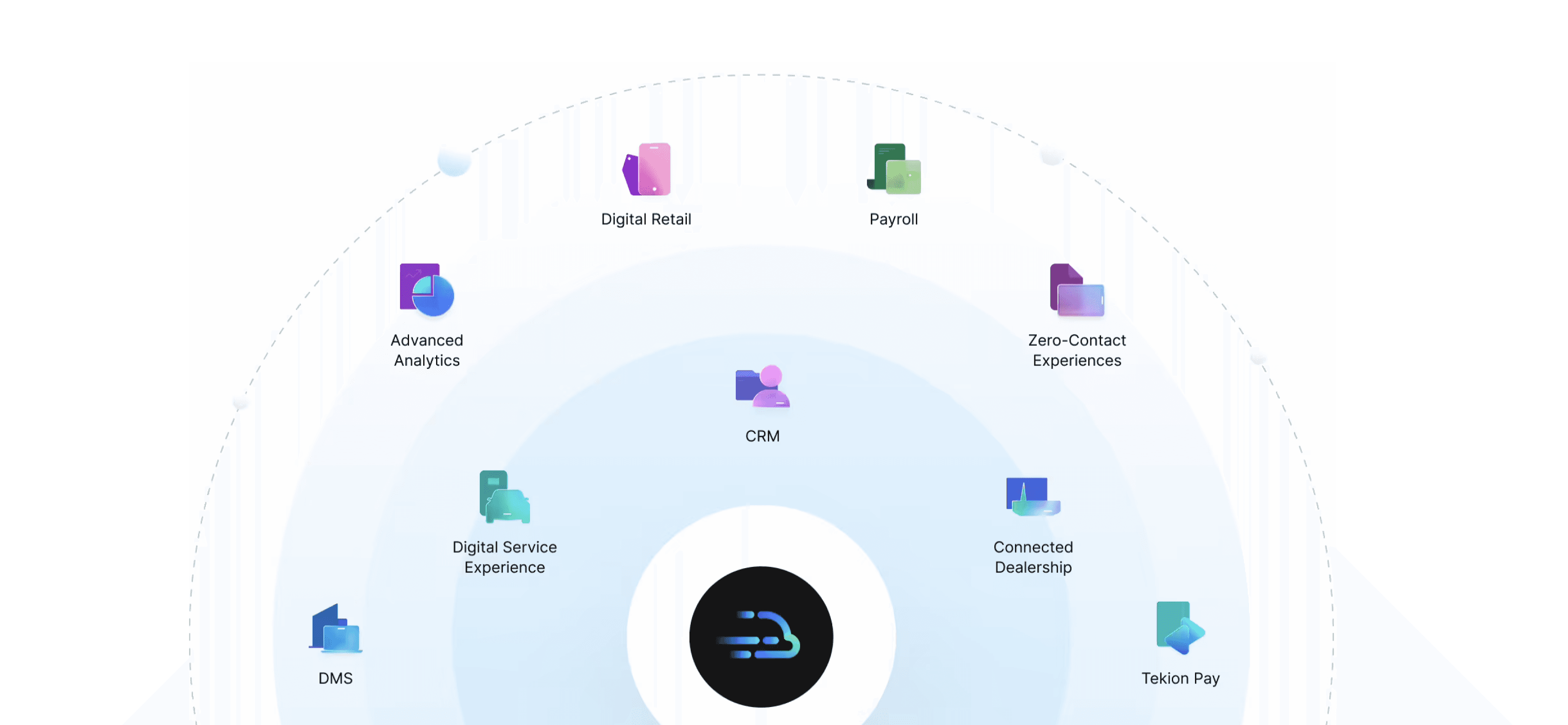
The ARC product features various modules that dealerships can subscribe to based on their specific needs.
Here are some of the features-
CRM tool: Helps manage customer relationships and provides insights.
Inventory and services management: Allows dealerships to maintain inventory, services, and daily operations.
Payroll system: Facilitates salary processing, tax calculations, and employee management.
Service schedule: Assists in organizing customer service appointments.
Financial management: Supports accounting and financial tasks for the dealership.
and many more…
The ARC product features various modules that dealerships can subscribe to based on their specific needs.
Here are some of the features-
CRM tool: Helps manage customer relationships and provides insights.
Inventory and services management: Allows dealerships to maintain inventory, services, and daily operations.
Payroll system: Facilitates salary processing, tax calculations, and employee management.
Service schedule: Assists in organizing customer service appointments.
Financial management: Supports accounting and financial tasks for the dealership.
and many more…
🌟 Tekion Automation Platform: Backbone of Tekion
To manage all its internal operations, Tekion relies on the Tekion Automation Platform (TAP), a robust enterprise tool that serves as the backbone of its business. TAP enables the Tekion team to streamline workflows and run day-to-day operations seamlessly.
To manage all its internal operations, Tekion relies on the Tekion Automation Platform (TAP), a robust enterprise tool that serves as the backbone of its business. TAP enables the Tekion team to streamline workflows and run day-to-day operations seamlessly.
The platform consists of various internal modules, such as TAP CRM, Task Management, Feature Tracker, Support Portal, and Partner Success Tools, each designed to handle specific aspects of the business and ensure efficiency at every step.
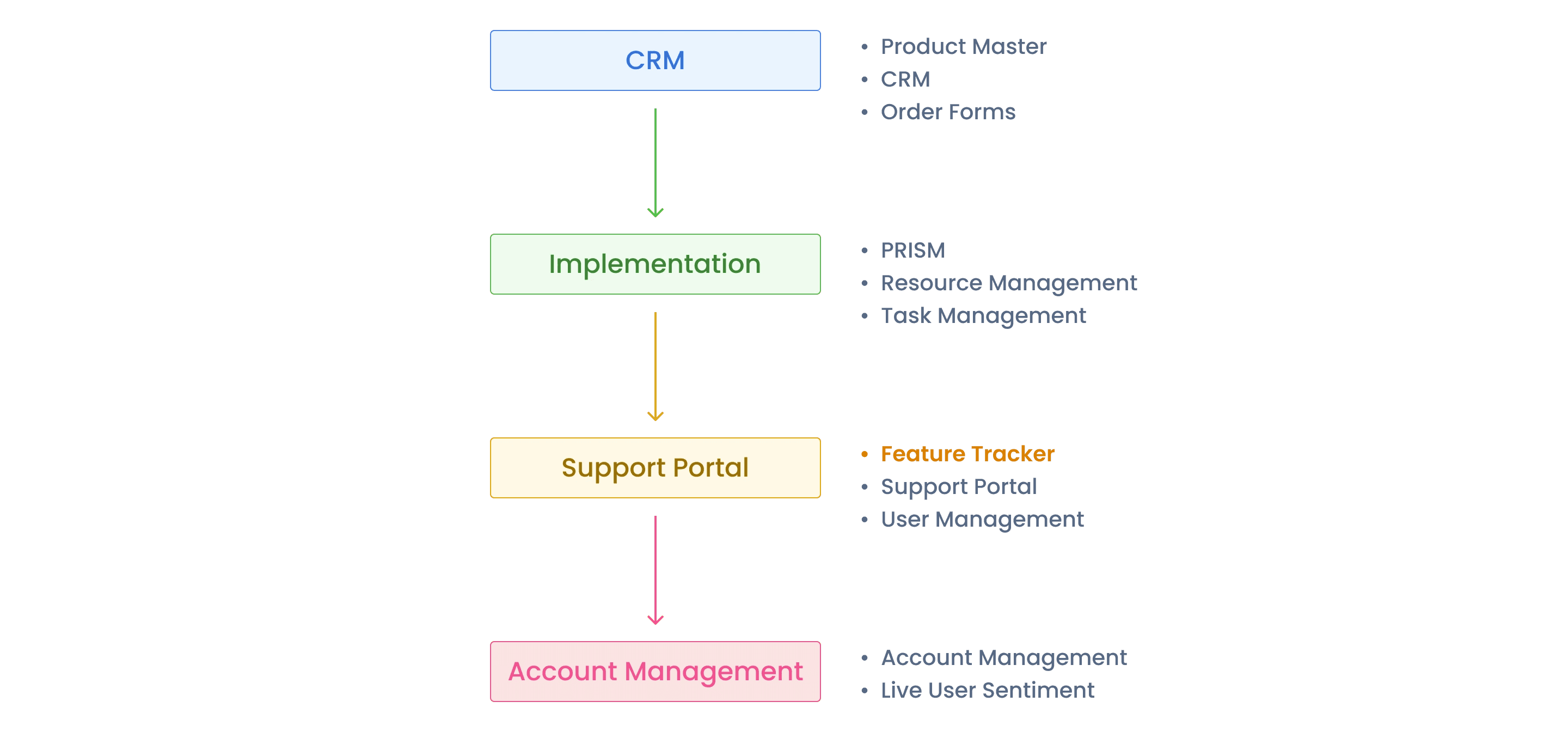
Tekion Automation Platform (TAP)
Tekion Automation Platform (TAP)
As seen from the above image, TAP covers all the modules as per the customer journey -
As seen from the above image, TAP covers all the modules as per the customer journey -
CRM: From getting the customer’s leads to onboarding them
CRM: From getting the customer’s leads to onboarding them
Implementation: Managing the resources and implementation for that dealership
Implementation: Managing the resources and implementation for that dealership
Support Portal: Taking care of the support tickets and feedback coming from the dealership, and
Support Portal: Taking care of the support tickets and feedback coming from the dealership, and
Account Management: Helping them create a smooth customer experience so they can run their day-to-day operations easily.
Account Management: Helping them create a smooth customer experience so they can run their day-to-day operations easily.
Everything is captured and managed by Tekion’s internal team via these modules.
Everything is captured and managed by Tekion’s internal team via these modules.
📈 Background: The Evolution of Feature Management at Tekion Corp
📈 Background: The Evolution of Feature Management at Tekion Corp
Initially, the product teams, including product managers and product specialists, manually managed feature requests at Tekion. These teams created 'Tasks' as feature requests based on feedback received from internal stakeholders or research findings.
Initially, the product teams, including product managers and product specialists, manually managed feature requests at Tekion. These teams created 'Tasks' as feature requests based on feedback received from internal stakeholders or research findings.
However, as Tekion onboarded more dealers and expanded its customer base, this approach began to show limitations. The increasing volume of feedback and feature suggestions became overwhelming, making it difficult to manage the requests manually and effectively.
The need for a more structured and scalable solution became apparent.
However, as Tekion onboarded more dealers and expanded its customer base, this approach began to show limitations. The increasing volume of feedback and feature suggestions became overwhelming, making it difficult to manage the requests manually and effectively.
The need for a more structured and scalable solution became apparent.
To address these growing challenges, Tekion introduced the Feature Tracker Module — a comprehensive solution designed to optimize and scale feature management in a single place.
To address these growing challenges, Tekion introduced the Feature Tracker Module — a comprehensive solution designed to optimize and scale feature management in a single place.
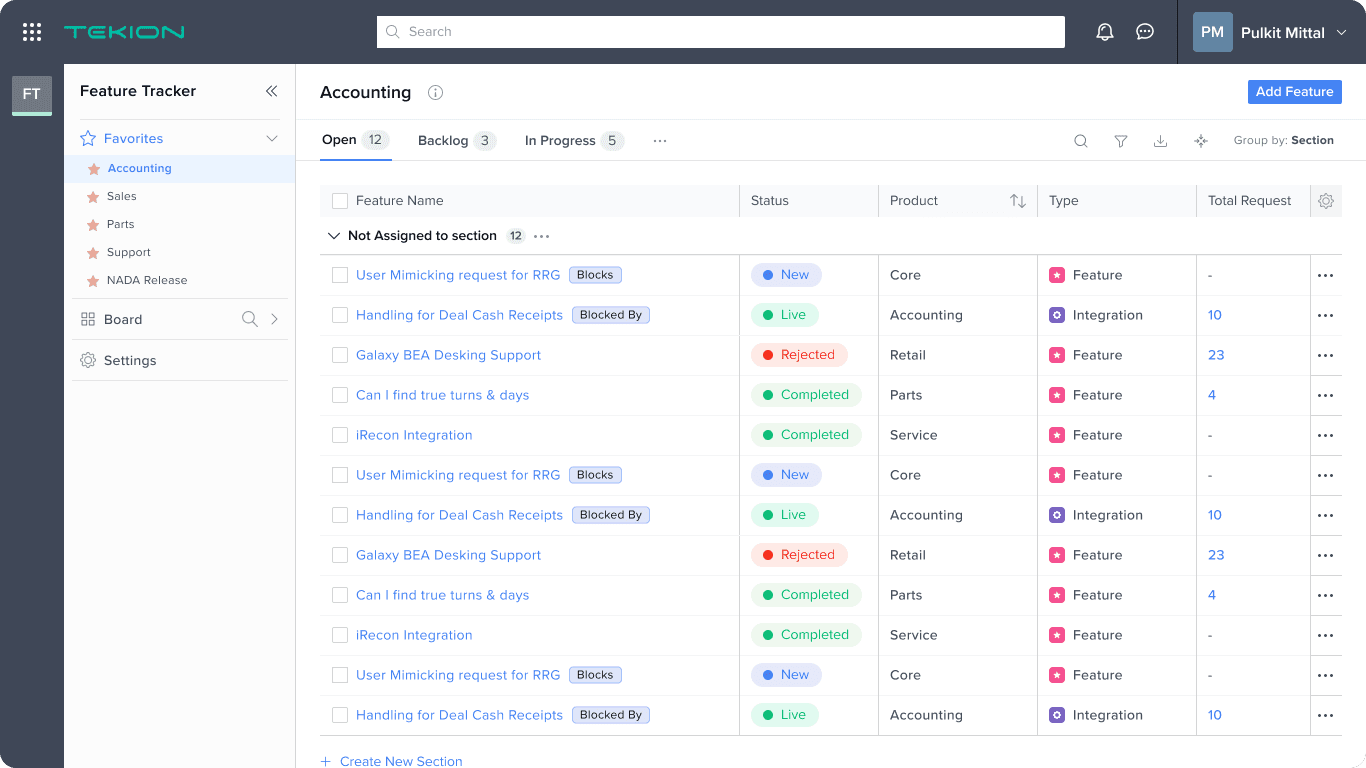
Benefits of Feature Tracker Module -
Benefits of Feature Tracker Module -
Centralized Feature Management: Streamlined the handling of feature requests, reducing chaos and enhancing planning efficiency.
Centralized Feature Management: Streamlined the handling of feature requests, reducing chaos and enhancing planning efficiency.
Accurate Sprint Planning: Organized requests for better sprint planning, ensuring timely delivery of high-priority features.
Accurate Sprint Planning: Organized requests for better sprint planning, ensuring timely delivery of high-priority features.
Comprehensive Status Tracking: Enabled seamless tracking of feature progress from design to QA, minimizing bottlenecks.
Comprehensive Status Tracking: Enabled seamless tracking of feature progress from design to QA, minimizing bottlenecks.
Real-Time Stakeholder Visibility: Provided stakeholders and teams with instant updates on upcoming features and roadmaps, fostering alignment.
Real-Time Stakeholder Visibility: Provided stakeholders and teams with instant updates on upcoming features and roadmaps, fostering alignment.
Prioritization Based on Impact: Allowed the team to prioritize requests based on business value, ensuring strategic focus.
Prioritization Based on Impact: Allowed the team to prioritize requests based on business value, ensuring strategic focus.
Improved Team Collaboration: Facilitated smoother interaction between Product, Development, and QA, reducing miscommunication.
Improved Team Collaboration: Facilitated smoother interaction between Product, Development, and QA, reducing miscommunication.
Short-lived benefits: The problem arises
This module seemed to work for a couple of years, but as Tekion Corp continued to onboard more dealers and expand its customer base, the initial Feature Tracker solution began to show its limitations.
This module seemed to work for a couple of years, but as Tekion Corp continued to onboard more dealers and expand its customer base, the initial Feature Tracker solution began to show its limitations.
The increasing volume of feature requests and feedback from various channels created significant challenges for the product teams. With the growing demand, it became evident that the existing system was inadequate in managing the complexities of feature prioritization and validation.
This led to a series of subsequent problems that needed urgent attention to ensure that the product could effectively meet the evolving needs of its users.
This led to a series of subsequent problems that needed urgent attention to ensure that the product could effectively meet the evolving needs of its users.
🎯 Design not only for the needs of today but also with a vision for the challenges and opportunities of tomorrow
🎯 Design not only for the needs of today but also with a vision for the challenges and opportunities of tomorrow
So let’s deep dive into it by first understanding the problems and setting up the knowledge base —
🧱 Define Stage: Setting up the foundation
🧱 Define Stage: Setting up the foundation
To start with, it was important for me to first establish a knowledge base that allows me to break down complex issues into their fundamental elements, following first principles of thinking.
To start with, it was important for me to first establish a knowledge base that allows me to break down complex issues into their fundamental elements, following first principles of thinking.
I scheduled several 1:1 meetings with stakeholders, product specialists, and product managers to gain a comprehensive understanding of the current scenario.
The primary goal was to:
The primary goal was to:
Understand the personas involved throughout the process.
Understand the personas involved throughout the process.
Analyze the current flow of feedback and suggestions between teams.
Analyze the current flow of feedback and suggestions between teams.
Identify gaps and challenges in the existing Feature Tracker module.
Identify gaps and challenges in the existing Feature Tracker module.
Explore future goals and scalability projections for the module and the company.
Explore future goals and scalability projections for the module and the company.
User Persona: Decoding the users
🎯 By defining user personas, we bridge the gap between design and real-world impact, ensuring every decision serves the user
🎯 By defining user personas, we bridge the gap between design and real-world impact, ensuring every decision serves the user
Let’s first understand the main personas involved in this cycle:
Let’s first understand the main personas involved in this cycle:
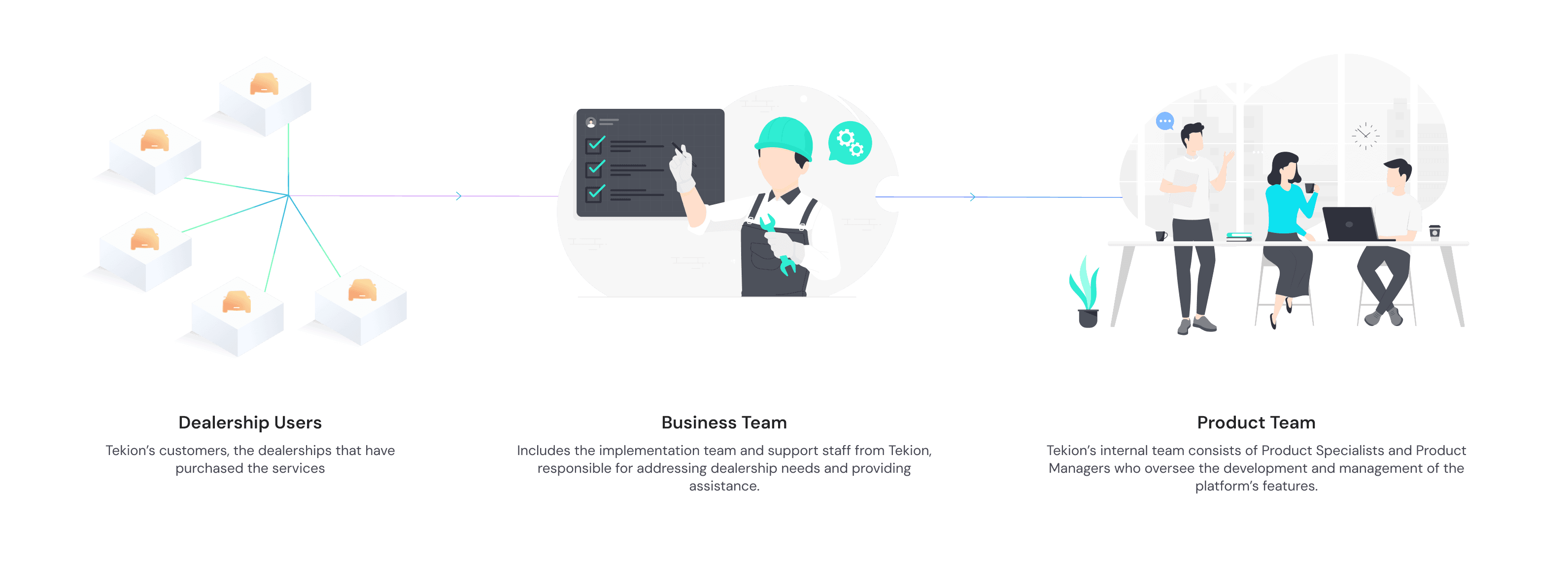
After several meetings and discussions, I mapped out the behaviors and pain points of these personas to break down the core challenges.
After several meetings and discussions, I mapped out the behaviors and pain points of these personas to break down the core challenges.

Dealership Users
Behaviours
Active Feedback Contributors: Frequently share feedback and suggestions of the modules or products they use, aiming to improve the platform.
Active Feedback Contributors: Frequently share feedback and suggestions of the modules or products they use, aiming to improve the platform.
Seeking Product Improvement: Express a desire for new features and enhancements that align with their business needs, helping to optimize daily operations and improve their user experience.
Seeking Product Improvement: Express a desire for new features and enhancements that align with their business needs, helping to optimize daily operations and improve their user experience.
Limited Product Knowledge: Often lack a complete understanding of the product’s full capabilities, which may limit their ability to utilize available features fully.
Limited Product Knowledge: Often lack a complete understanding of the product’s full capabilities, which may limit their ability to utilize available features fully.
Pain Points
Lack of Clarity: Struggle to update or share their feedback and opinions with Tekion’s concerned teams as there is no direct channel.
Lack of Clarity: Struggle to update or share their feedback and opinions with Tekion’s concerned teams as there is no direct channel.
Difficulty in Articulating Needs: They have challenges clearly in expressing their ideas or requirements, which can lead to potential miscommunication between them and the product team resulting in bad CX.
Difficulty in Articulating Needs: They have challenges clearly in expressing their ideas or requirements, which can lead to potential miscommunication between them and the product team resulting in bad CX.
Feeling Disconnected from the Process: Often feel disconnected from the overall product development cycle, unsure if their input is being taken seriously or where their ideas stand regarding implementation.
Feeling Disconnected from the Process: Often feel disconnected from the overall product development cycle, unsure if their input is being taken seriously or where their ideas stand regarding implementation.
Time Constraints: Busy schedules limit their ability to deep-dive into understanding feature updates, relying on clear, concise communication from product teams.
Time Constraints: Busy schedules limit their ability to deep-dive into understanding feature updates, relying on clear, concise communication from product teams.

Business Teams
Behaviours
Acting as Intermediaries: Serve as intermediaries between dealership users and the product team by raising feature requests based on customer feedback and insights.
Acting as Intermediaries: Serve as intermediaries between dealership users and the product team by raising feature requests based on customer feedback and insights.
Identify Pain Points: Frequently interact with dealer users, identifying recurring pain points, gaps in product functionality, or new feature opportunities.
Identify Pain Points: Frequently interact with dealer users, identifying recurring pain points, gaps in product functionality, or new feature opportunities.
Customer Advocacy: Advocate for features that they believe will enhance user satisfaction, streamline dealer operations, or improve overall product usability.
Customer Advocacy: Advocate for features that they believe will enhance user satisfaction, streamline dealer operations, or improve overall product usability.
Collaborating with Product Team: Work closely with the product team to ensure that customer-centric features are being considered and communicated effectively.
Collaborating with Product Team: Work closely with the product team to ensure that customer-centric features are being considered and communicated effectively.
Pain Points
Managing Feature Requests Efficiently: Struggle with handling a large influx of feature ideas, feedback, and suggestions coming from the dealerships, making it difficult to prioritize the most critical requests.
Managing Feature Requests Efficiently: Struggle with handling a large influx of feature ideas, feedback, and suggestions coming from the dealerships, making it difficult to prioritize the most critical requests.
Communication Gaps: Experience challenges in ensuring that customer requirements and expectations are communicated to the product team due to the lack of a single platform.
Communication Gaps: Experience challenges in ensuring that customer requirements and expectations are communicated to the product team due to the lack of a single platform.
Balancing Conflicting Priorities: Face difficulty balancing the competing priorities of customer demands, market trends, and internal business goals.
Balancing Conflicting Priorities: Face difficulty balancing the competing priorities of customer demands, market trends, and internal business goals.
Aligning with Product Strategy: Occasionally find it difficult to align customer-centric requests with the overall product roadmap, creating tension between customer advocacy and business strategy.
Aligning with Product Strategy: Occasionally find it difficult to align customer-centric requests with the overall product roadmap, creating tension between customer advocacy and business strategy.
Monitoring Feature Progress: Have limited visibility into the status of requested features, causing frustration when trying to provide updates to customers.
Monitoring Feature Progress: Have limited visibility into the status of requested features, causing frustration when trying to provide updates to customers.

Product Teams
Behaviours
Curating Feature Ideas: Responsible for collecting, curating, and organizing feature ideas and feedback from dealership clients, internal teams, and other stakeholders from various channels.
Curating Feature Ideas: Responsible for collecting, curating, and organizing feature ideas and feedback from dealership clients, internal teams, and other stakeholders from various channels.
Evaluating Feature Viability: Assess feature ideas by weighing the technical, business, and user experience aspects to determine the feasibility of implementation.
Evaluating Feature Viability: Assess feature ideas by weighing the technical, business, and user experience aspects to determine the feasibility of implementation.
Prioritizing the Product Roadmap: Play a key role in defining and prioritizing the product roadmap, ensuring it aligns with the company’s strategic objectives, industry trends, and customer feedback.
Prioritizing the Product Roadmap: Play a key role in defining and prioritizing the product roadmap, ensuring it aligns with the company’s strategic objectives, industry trends, and customer feedback.
Facilitating Cross-Functional Collaboration: Collaborate with developers, designers, and stakeholders to ensure the selected features align with technical capabilities and strategic goals.
Facilitating Cross-Functional Collaboration: Collaborate with developers, designers, and stakeholders to ensure the selected features align with technical capabilities and strategic goals.
Customer Advocacy: Often act as advocates for customer needs, balancing them against technical and business realities to bring forward the most impactful features.
Customer Advocacy: Often act as advocates for customer needs, balancing them against technical and business realities to bring forward the most impactful features.
Pain Points
Evaluating Viability: Struggle with balancing technical feasibility, business priorities, and user needs, especially when feature ideas are unclear or unrealistic.
Evaluating Viability: Struggle with balancing technical feasibility, business priorities, and user needs, especially when feature ideas are unclear or unrealistic.
Scope Creep: Struggle to stay focused on the main product vision when overwhelmed with too many requests, often having to balance between sticking to the plan and allowing room for new ideas.
Scope Creep: Struggle to stay focused on the main product vision when overwhelmed with too many requests, often having to balance between sticking to the plan and allowing room for new ideas.
Handling Volume: Overwhelmed by the sheer volume of incoming feature ideas from multiple channels, making it difficult to stay organized and ensure no valuable ideas are overlooked.
Handling Volume: Overwhelmed by the sheer volume of incoming feature ideas from multiple channels, making it difficult to stay organized and ensure no valuable ideas are overlooked.
Clear Communication: Struggle to communicate the long-term product vision and roadmap to non-technical stakeholders in a way that is easy to understand.
Clear Communication: Struggle to communicate the long-term product vision and roadmap to non-technical stakeholders in a way that is easy to understand.
From these above 3 personas, we can get the clear understanding of the current flow of feedback and ideas along with the user frustrations & pain points attached to it.
From these above 3 personas, we can get the clear understanding of the current flow of feedback and ideas along with the user frustrations & pain points attached to it.
🎯 Understanding User Goals: The Key to Impactful Design
🎯 Understanding User Goals: The Key to Impactful Design
Since we’ve understood the personas’ behaviors and pain points, let's now dive into their motives and goals. While pain points highlight immediate challenges, it's the user’s goals and motivations that drive impactful design.
Since we’ve understood the personas’ behaviors and pain points, let's now dive into their motives and goals. While pain points highlight immediate challenges, it's the user’s goals and motivations that drive impactful design.
This understanding enables us in:
This understanding enables us in:
Guiding Design Decisions: User goals direct our focus toward features that provide real value, ensuring our design choices align with their priorities.
Guiding Design Decisions: User goals direct our focus toward features that provide real value, ensuring our design choices align with their priorities.
Empathy-Driven Design: Designing with users' goals in mind fosters solutions that address both emotional and practical needs, enhancing engagement and satisfaction.
Empathy-Driven Design: Designing with users' goals in mind fosters solutions that address both emotional and practical needs, enhancing engagement and satisfaction.
Anticipating Future Needs: By centering on users' goals, we create solutions that meet both emotional and practical needs, enhancing engagement and satisfaction.
Anticipating Future Needs: By centering on users' goals, we create solutions that meet both emotional and practical needs, enhancing engagement and satisfaction.
Let’s analyze the goals and needs of the users -
Let’s analyze the goals and needs of the users -
1) Dealership Users
1) Dealership Users
Motives
Motives
Improve their business efficiency by leveraging new features that solve operational challenges.
Improve their business efficiency by leveraging new features that solve operational challenges.
Stay competitive by ensuring that their dealership has the latest tools and functionalities.
Stay competitive by ensuring that their dealership has the latest tools and functionalities.
Have their feedback acknowledged and acted upon by the product team.
Have their feedback acknowledged and acted upon by the product team.
Goals
Goals
Submit feature ideas with ease and know the status of those requests.
Submit feature ideas with ease and know the status of those requests.
See rapid implementation of critical features that directly benefit their business operations.
See rapid implementation of critical features that directly benefit their business operations.
Gain more clarity on how their feedback is influencing product updates.
Gain more clarity on how their feedback is influencing product updates.
2) Business Teams
2) Business Teams
Motives
Motives
Advocate for the best interest of customers by pushing for features that improve their experience.
Advocate for the best interest of customers by pushing for features that improve their experience.
Align the product with the market’s needs and keep up with customer demands.
Align the product with the market’s needs and keep up with customer demands.
Collaborate effectively with product teams to influence roadmap decisions.
Collaborate effectively with product teams to influence roadmap decisions.
Goals
Goals
Manage and organize feedback and ideas effectively without creating bottlenecks.
Manage and organize feedback and ideas effectively without creating bottlenecks.
Clearly communicate customer needs to the product team and ensure their ideas are being considered.
Clearly communicate customer needs to the product team and ensure their ideas are being considered.
Keep customers informed on the status of requested ideas or feedback and upcoming updates.
Keep customers informed on the status of requested ideas or feedback and upcoming updates.
3) Product Teams
3) Product Teams
Motives
Motives
Ensure the product remains competitive and meets both business and customer needs.
Ensure the product remains competitive and meets both business and customer needs.
Streamline the feature idea or feedback process to avoid being overwhelmed by irrelevant or redundant requests.
Streamline the feature idea or feedback process to avoid being overwhelmed by irrelevant or redundant requests.
Maintain a clear, organized roadmap that can be easily communicated to stakeholders.
Maintain a clear, organized roadmap that can be easily communicated to stakeholders.
Goals
Goals
Efficiently manage and prioritize feature ideas and feedback.
Efficiently manage and prioritize feature ideas and feedback.
Quickly identify viable feature ideas that align with technical feasibility and business strategy.
Quickly identify viable feature ideas that align with technical feasibility and business strategy.
Create transparent communication channels to share updates on product development and progress.
Create transparent communication channels to share updates on product development and progress.
📝 Summarizing — What we have learned so far
📝 Summarizing — What we have learned so far
After analyzing the behaviors, pain points, and motives of our personas — Dealership Users, Business Teams, and Product Teams— we realized that the main issue was a lack of a proper mechanism to channel feature ideas and feedback.
After analyzing the behaviors, pain points, and motives of our personas — Dealership Users, Business Teams, and Product Teams— we realized that the main issue was a lack of a proper mechanism to channel feature ideas and feedback.
The influx of ideas and feedback from multiple sources created noise, leading to confusion and inefficiencies.
The influx of ideas and feedback from multiple sources created noise, leading to confusion and inefficiencies.
🎯 We needed a solution that would streamline this process while ensuring that valuable ideas are being captured, filtered, and acted upon efficiently.
🎯 We needed a solution that would streamline this process while ensuring that valuable ideas are being captured, filtered, and acted upon efficiently.
To summarize -
To summarize -
Dealership Users needed clarity and visibility into the feature idea’s and feedback process.
Dealership Users needed clarity and visibility into the feature idea’s and feedback process.
Business Teams wanted a better mechanism to advocate for customer-centric improvements.
Business Teams wanted a better mechanism to advocate for customer-centric improvements.
Product Teams required a structured way to manage the flood of incoming ideas and feedback.
Product Teams required a structured way to manage the flood of incoming ideas and feedback.
💡 Exploring Effective Solutions
💡 Exploring Effective Solutions
We explored multiple approaches to streamline the feedback-to-feature process, aiming for effective communication between dealership users, the business team, and product development. Each solution prioritizes alignment with user needs and business goals.
We explored multiple approaches to streamline the feedback-to-feature process, aiming for effective communication between dealership users, the business team, and product development. Each solution prioritizes alignment with user needs and business goals.
Key Aspects for Optimal Solution Design:
Key Aspects for Optimal Solution Design:
Customer Experience Alignment: Prioritize a solution that reduces friction in feedback submission and tracking, ensuring dealership users feel heard and valued, ultimately increasing their engagement with Tekion’s platform.
Customer Experience Alignment: Prioritize a solution that reduces friction in feedback submission and tracking, ensuring dealership users feel heard and valued, ultimately increasing their engagement with Tekion’s platform.
Product Efficiency: Design for streamlined data flow and feedback visibility for product teams, allowing more precise prioritization and response to requests, addressing the current feedback management bottlenecks.
Product Efficiency: Design for streamlined data flow and feedback visibility for product teams, allowing more precise prioritization and response to requests, addressing the current feedback management bottlenecks.
Business & Tekion Growth: Implement feedback systems that promote Tekion’s adaptability to emerging user needs, helping establish Tekion as a responsive, customer-centered platform that builds long-term partnerships.
Business & Tekion Growth: Implement feedback systems that promote Tekion’s adaptability to emerging user needs, helping establish Tekion as a responsive, customer-centered platform that builds long-term partnerships.
Scalability: Develop with Tekion’s growth trajectory in mind, ensuring the solution can scale as Tekion’s user base expands and feedback volume and complexity increase.
Scalability: Develop with Tekion’s growth trajectory in mind, ensuring the solution can scale as Tekion’s user base expands and feedback volume and complexity increase.
1️⃣ Approach 1: Independent feedback platform for Business Teams
This solution envisions a dedicated platform for the business team, enabling them to log all dealership feedback in a structured format. The product team can then access this platform to evaluate feedback, identify high-potential ideas, and raise feature requests accordingly. This creates a streamlined, two-step process, where the relevant teams systematically record and review dealership insights.
This solution envisions a dedicated platform for the business team, enabling them to log all dealership feedback in a structured format. The product team can then access this platform to evaluate feedback, identify high-potential ideas, and raise feature requests accordingly. This creates a streamlined, two-step process, where the relevant teams systematically record and review dealership insights.
Strengths:
Strengths:
Enhanced Traceability: By centralizing feedback, the platform ensures that every piece of input from dealerships is traceable, organized, and easily accessible, helping avoid lost or overlooked feedback.
Enhanced Traceability: By centralizing feedback, the platform ensures that every piece of input from dealerships is traceable, organized, and easily accessible, helping avoid lost or overlooked feedback.
Cross-Team Transparency: Facilitates transparency between business and product teams, giving each team visibility into feedback trends and potential opportunities.
Cross-Team Transparency: Facilitates transparency between business and product teams, giving each team visibility into feedback trends and potential opportunities.
Prioritization of High-Impact Features: Allows the product team to efficiently prioritize feature requests, focusing resources on the most impactful and widely requested improvements.
Prioritization of High-Impact Features: Allows the product team to efficiently prioritize feature requests, focusing resources on the most impactful and widely requested improvements.
Drawbacks:
Drawbacks:
Dependence on Manual Input: Relies on business teams to actively input and categorize feedback, which may introduce delays or inconsistencies if feedback isn’t consistently logged.
Dependence on Manual Input: Relies on business teams to actively input and categorize feedback, which may introduce delays or inconsistencies if feedback isn’t consistently logged.
Limited Real-Time Dealer Engagement: Lacks a direct feedback loop with dealership users, which could slow down the response time to urgent or high-priority feedback.
Limited Real-Time Dealer Engagement: Lacks a direct feedback loop with dealership users, which could slow down the response time to urgent or high-priority feedback.
Scalability Constraints: As feedback volume grows, maintaining and managing a centralized repository may become challenging without automation, potentially leading to bottlenecks in processing.
Scalability Constraints: As feedback volume grows, maintaining and managing a centralized repository may become challenging without automation, potentially leading to bottlenecks in processing.
2️⃣ Approach 2: Centralized platform for capturing "Product Ideas"
2️⃣ Approach 2: Centralized platform for capturing "Product Ideas"
The Product Idea Module serves as a collaborative “middle layer,” bridging dealership users and other stakeholders directly with the product team.
Here’s how it works: stakeholders and dealership users submit ideas, suggestions, and improvement requests within the module, creating a centralized feedback repository.
This allows product teams to efficiently view, analyze, and evaluate submissions in a structured environment, identifying high-potential ideas for conversion into formal feature requests.
The Product Idea Module serves as a collaborative “middle layer,” bridging dealership users and other stakeholders directly with the product team.
Here’s how it works: stakeholders and dealership users submit ideas, suggestions, and improvement requests within the module, creating a centralized feedback repository.
This allows product teams to efficiently view, analyze, and evaluate submissions in a structured environment, identifying high-potential ideas for conversion into formal feature requests.
Strengths:
Strengths:
Direct User-Driven Insights: Empowers dealership users to share feedback directly, ensuring that their needs and pain points are prioritized and communicated with precision.
Direct User-Driven Insights: Empowers dealership users to share feedback directly, ensuring that their needs and pain points are prioritized and communicated with precision.
Streamlined Prioritization: By centralizing ideas, the product team can better prioritize and track feedback, focusing resources on ideas with the greatest impact.
Streamlined Prioritization: By centralizing ideas, the product team can better prioritize and track feedback, focusing resources on ideas with the greatest impact.
Improved Product Evolution: Enables continuous product improvements driven by dealership insights, leading to a more adaptive and user-centered product experience.
Improved Product Evolution: Enables continuous product improvements driven by dealership insights, leading to a more adaptive and user-centered product experience.
Enhanced Cross-Functional Alignment: Facilitates alignment between dealership, business, and product teams, helping to bridge any communication gaps and create a shared understanding of priorities.
Enhanced Cross-Functional Alignment: Facilitates alignment between dealership, business, and product teams, helping to bridge any communication gaps and create a shared understanding of priorities.
Drawbacks:
Drawbacks:
Requires Consistent Usage: Success depends on active use by all stakeholders; if engagement wanes, valuable insights may be missed.
Requires Consistent Usage: Success depends on active use by all stakeholders; if engagement wanes, valuable insights may be missed.
Feedback Overload: High input volumes may create analysis bottlenecks without adequate filtering mechanisms.
Feedback Overload: High input volumes may create analysis bottlenecks without adequate filtering mechanisms.
✅ The Verdict:
After evaluating these approaches, along with several others, the approach that best aligns with Tekion’s future growth and business objectives is
After evaluating these approaches, along with several others, the approach that best aligns with Tekion’s future growth and business objectives is
👑 Approach 2: Centralized platform for capturing "Product Ideas"
👑 Approach 2: Centralized platform for capturing "Product Ideas"
The Product Idea Module stands out as the ideal choice, enhancing both efficiency and business value for Tekion. It centralizes feedback, reducing ambiguity and ensuring that only high-impact ideas progress. With scalability aligned to Tekion's growth strategy, it adapts seamlessly as business needs evolve, promoting continuous innovation and loyalty.
The Product Idea Module stands out as the ideal choice, enhancing both efficiency and business value for Tekion. It centralizes feedback, reducing ambiguity and ensuring that only high-impact ideas progress. With scalability aligned to Tekion's growth strategy, it adapts seamlessly as business needs evolve, promoting continuous innovation and loyalty.
Now, let’s dive deeper into understanding how the Product Idea Module works.
Now, let’s dive deeper into understanding how the Product Idea Module works.
🛠️ Building "Product Idea" Module
🛠️ Building "Product Idea" Module
To design the flows for the Product Idea module, we need to focus on two key sides:
To design the flows for the Product Idea module, we need to focus on two key sides:
Dealership Side: This side will capture ideas from dealership users, providing them with a simple and intuitive interface to submit their feedback and suggestions. The goal is to make the process seamless and engaging, encouraging users to share their insights.
Dealership Side: This side will capture ideas from dealership users, providing them with a simple and intuitive interface to submit their feedback and suggestions. The goal is to make the process seamless and engaging, encouraging users to share their insights.
Product Team Side: This interface will enable the product team to monitor incoming ideas, evaluate their potential, and convert promising suggestions into feature requests.
Product Team Side: This interface will enable the product team to monitor incoming ideas, evaluate their potential, and convert promising suggestions into feature requests.
📝 Journey of Product Idea to Feautre Request-
📝 Journey of Product Idea to Feautre Request-
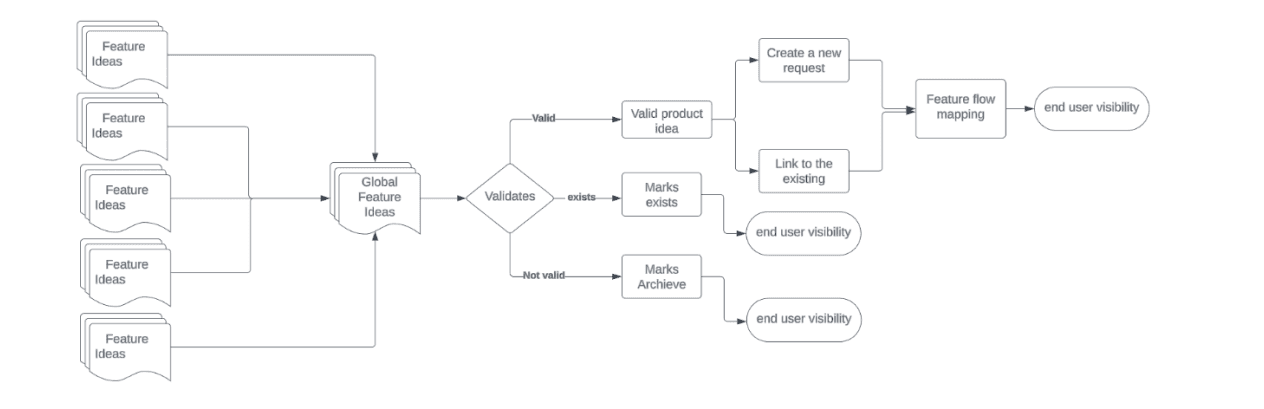
Let's understand the flow :
Global Feature Ideas: This is the dealership side where all ideas and feedback from various dealers are aggregated. It serves as a centralized hub, allowing dealers to easily submit their suggestions and insights, fostering a culture of collaboration and innovation.
Global Feature Ideas: This is the dealership side where all ideas and feedback from various dealers are aggregated. It serves as a centralized hub, allowing dealers to easily submit their suggestions and insights, fostering a culture of collaboration and innovation.
Validation Stage: This is where the product team steps in. All submitted ideas are reviewed and assessed based on feasibility and alignment with product standards. The product team classifies the ideas into three categories:
Validation Stage: This is where the product team steps in. All submitted ideas are reviewed and assessed based on feasibility and alignment with product standards. The product team classifies the ideas into three categories:
Valid: If an idea meets product standards, it’s converted into a new feature request or linked to an existing one to ensure valuable feedback is utilized.
Valid: If an idea meets product standards, it’s converted into a new feature request or linked to an existing one to ensure valuable feedback is utilized.
Not Valid: Ideas that don’t meet product standards are marked accordingly, offering clear feedback to dealers on the status of their suggestions.
Not Valid: Ideas that don’t meet product standards are marked accordingly, offering clear feedback to dealers on the status of their suggestions.
Exists: If an idea is already in development or part of an existing feature, it will be categorized as exists, helping to inform dealers that their suggestion is already being addressed.
Exists: If an idea is already in development or part of an existing feature, it will be categorized as exists, helping to inform dealers that their suggestion is already being addressed.
🚗 Dealer's Side View: A Comprehensive View
🚗 Dealer's Side View: A Comprehensive View

Inclusive Feedback Collection: A unified platform encourages input from different dealers and stakeholders with different technical expertise, leading to a more comprehensive product roadmap.
Inclusive Feedback Collection: A unified platform encourages input from different dealers and stakeholders with different technical expertise, leading to a more comprehensive product roadmap.
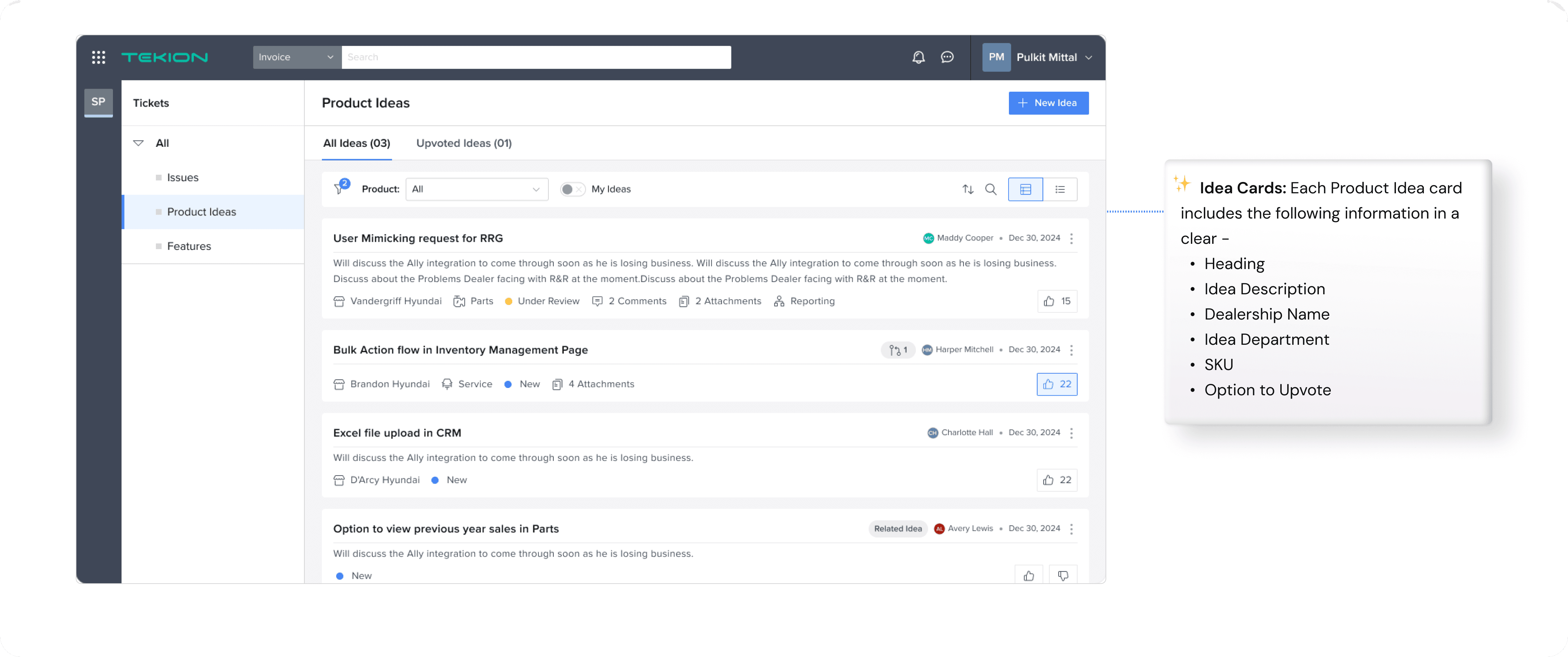
An insight to dealer's side view:
Organized Management: Ideas are categorized separately from feature requests, making it easier to sort, evaluate, and prioritize suggestions.
Organized Management: Ideas are categorized separately from feature requests, making it easier to sort, evaluate, and prioritize suggestions.
Improved Filtering: The module acts as a filter, preventing backlog clutter by focusing on viable ideas for product teams to review.
Improved Filtering: The module acts as a filter, preventing backlog clutter by focusing on viable ideas for product teams to review.
Improved Collaboration: The module fosters better collaboration between stakeholders and the product team, allowing non-technical users to submit ideas without formal processes.
Improved Collaboration: The module fosters better collaboration between stakeholders and the product team, allowing non-technical users to submit ideas without formal processes.
Engaging Non-Technical Users: Lowers barriers, enabling all users to contribute and ensuring innovative suggestions are not overlooked.
Engaging Non-Technical Users: Lowers barriers, enabling all users to contribute and ensuring innovative suggestions are not overlooked.
Progress Transparency: Stakeholders can track the status of their ideas in real-time, strengthening their connection to the product development process.
Progress Transparency: Stakeholders can track the status of their ideas in real-time, strengthening their connection to the product development process.
⬆️ Enhancing User Engagement: The Upvote Feature
⬆️ Enhancing User Engagement: The Upvote Feature
To address the challenges of introducing a new module, such as user adoption, retention, and consistent usage, it is essential to create an engaging and rewarding experience for the dealers. Recognizing the importance of user interaction, we implemented an innovative Upvote Feature that fosters collaboration and encourages participation within the dealership community.
To address the challenges of introducing a new module, such as user adoption, retention, and consistent usage, it is essential to create an engaging and rewarding experience for the dealers. Recognizing the importance of user interaction, we implemented an innovative Upvote Feature that fosters collaboration and encourages participation within the dealership community.
Key Aspects of the Upvote Feature:
Key Aspects of the Upvote Feature:
User Empowerment: Dealers can upvote ideas they resonate with or believe have potential, giving them a voice in the development process.
User Empowerment: Dealers can upvote ideas they resonate with or believe have potential, giving them a voice in the development process.
Collaboration and Discussion: Users can comment on various ideas, fostering a collaborative environment where dealers can share insights and refine concepts collectively.
Collaboration and Discussion: Users can comment on various ideas, fostering a collaborative environment where dealers can share insights and refine concepts collectively.
Increased Engagement: The Upvote feature makes the module more interactive, acting as a hook, and encouraging users to participate actively and regularly.
Increased Engagement: The Upvote feature makes the module more interactive, acting as a hook, and encouraging users to participate actively and regularly.
Future Rewards and Recognition: We plan to introduce incentives for dealerships that contribute the most valuable ideas and feedback, turning engagement into tangible benefits.
Future Rewards and Recognition: We plan to introduce incentives for dealerships that contribute the most valuable ideas and feedback, turning engagement into tangible benefits.
👨🏻💻 Product's Side View: A Comprehensive View
👨🏻💻 Product's Side View: A Comprehensive View
Steps involved at "Product side" module:
Steps involved at "Product side" module:

1️⃣ - All the ideas will come under the "Un-processed" bucket.
1️⃣ - All the ideas will come under the "Un-processed" bucket.
2️⃣ - The assigned person will then go through every idea and classify those under the “Product” and “Workflow” field types.
2️⃣ - The assigned person will then go through every idea and classify those under the “Product” and “Workflow” field types.

3️⃣ - Once an idea is assigned to a specific product, the Product Specialist for that product assesses it. Based on established criteria, the specialist can categorize the idea as "Valid", "Existing", or "Not Valid".
3️⃣ - Once an idea is assigned to a specific product, the Product Specialist for that product assesses it. Based on established criteria, the specialist can categorize the idea as "Valid", "Existing", or "Not Valid".
Detailed View of Product Idea:
Detailed View of Product Idea:
Product Specialists can access a detailed view of each Product Idea, along with any attachments uploaded by the user.
Product Specialists can access a detailed view of each Product Idea, along with any attachments uploaded by the user.
They can collaborate with fellow Tekion members directly within the platform to brainstorm or discuss the scope of the idea further.
They can collaborate with fellow Tekion members directly within the platform to brainstorm or discuss the scope of the idea further.
Specialists can also view a list of other dealerships that have submitted similar ideas within a specific time frame, facilitating broader insights and decision-making.
Specialists can also view a list of other dealerships that have submitted similar ideas within a specific time frame, facilitating broader insights and decision-making.
⚖️ Customization vs. Standardization: Balancing Dealer Needs with Product Vision
⚖️ Customization vs. Standardization: Balancing Dealer Needs with Product Vision
The new structure enables product managers to categorize ideas based on whether they address specific dealer requirements or align with broader company goals. This distinction allows Tekion to maintain a balance between creating tailored solutions for individual clients and delivering universal features that benefit the entire user base.
The new structure enables product managers to categorize ideas based on whether they address specific dealer requirements or align with broader company goals. This distinction allows Tekion to maintain a balance between creating tailored solutions for individual clients and delivering universal features that benefit the entire user base.
It helps us in:
It helps us in:
Targeted Dealer Solutions: Enables flexibility for features that address unique dealer requirements without impacting the core product.
Targeted Dealer Solutions: Enables flexibility for features that address unique dealer requirements without impacting the core product.
Scalable Product Goals: Supports Tekion’s growth by prioritizing features that can scale across all dealerships, enhancing product consistency.
Scalable Product Goals: Supports Tekion’s growth by prioritizing features that can scale across all dealerships, enhancing product consistency.
Efficient Resource Allocation: Helps product teams efficiently allocate resources, focusing on features that bring maximum value to both individual and collective user needs.
Efficient Resource Allocation: Helps product teams efficiently allocate resources, focusing on features that bring maximum value to both individual and collective user needs.
Unified Product Direction: Ensures that all features support Tekion’s strategic goals for cohesive growth.
Unified Product Direction: Ensures that all features support Tekion’s strategic goals for cohesive growth.
🔥 Flow Testing and Refining the MVP
🔥 Flow Testing and Refining the MVP
Before finally launching the “Product Idea” module, it was crucial to test the MVP with the Product Specialist team. This step was taken to gain insights into how the module would be used in practice and to identify any gaps or areas for improvement in the flow.
Before finally launching the “Product Idea” module, it was crucial to test the MVP with the Product Specialist team. This step was taken to gain insights into how the module would be used in practice and to identify any gaps or areas for improvement in the flow.
The objective was to ensure the solution was aligned with user needs and the anticipated high volume of ideas from dealership users.
The objective was to ensure the solution was aligned with user needs and the anticipated high volume of ideas from dealership users.
Key objectives of the testing:
Key objectives of the testing:
Identifying Gaps and Improvements: The focus was to uncover gaps in the current flow and pinpoint areas where the process could be refined before the official launch.
Identifying Gaps and Improvements: The focus was to uncover gaps in the current flow and pinpoint areas where the process could be refined before the official launch.
Creating a User Journey Map: I mapped out the user journey to track the flow of tasks and identify potential friction points or inefficiencies in managing incoming Product Ideas.
Creating a User Journey Map: I mapped out the user journey to track the flow of tasks and identify potential friction points or inefficiencies in managing incoming Product Ideas.
Understanding Anticipated Volume: Since dealer users could submit ideas freely, it was essential to assess how Product Specialists would manage the expected high volume of incoming ideas.
Understanding Anticipated Volume: Since dealer users could submit ideas freely, it was essential to assess how Product Specialists would manage the expected high volume of incoming ideas.
Focusing on the Product Specialist POV: The key objective was to gather feedback on how effectively Product Specialists could manage, filter, and prioritize the Product Ideas submitted by users.
Focusing on the Product Specialist POV: The key objective was to gather feedback on how effectively Product Specialists could manage, filter, and prioritize the Product Ideas submitted by users.
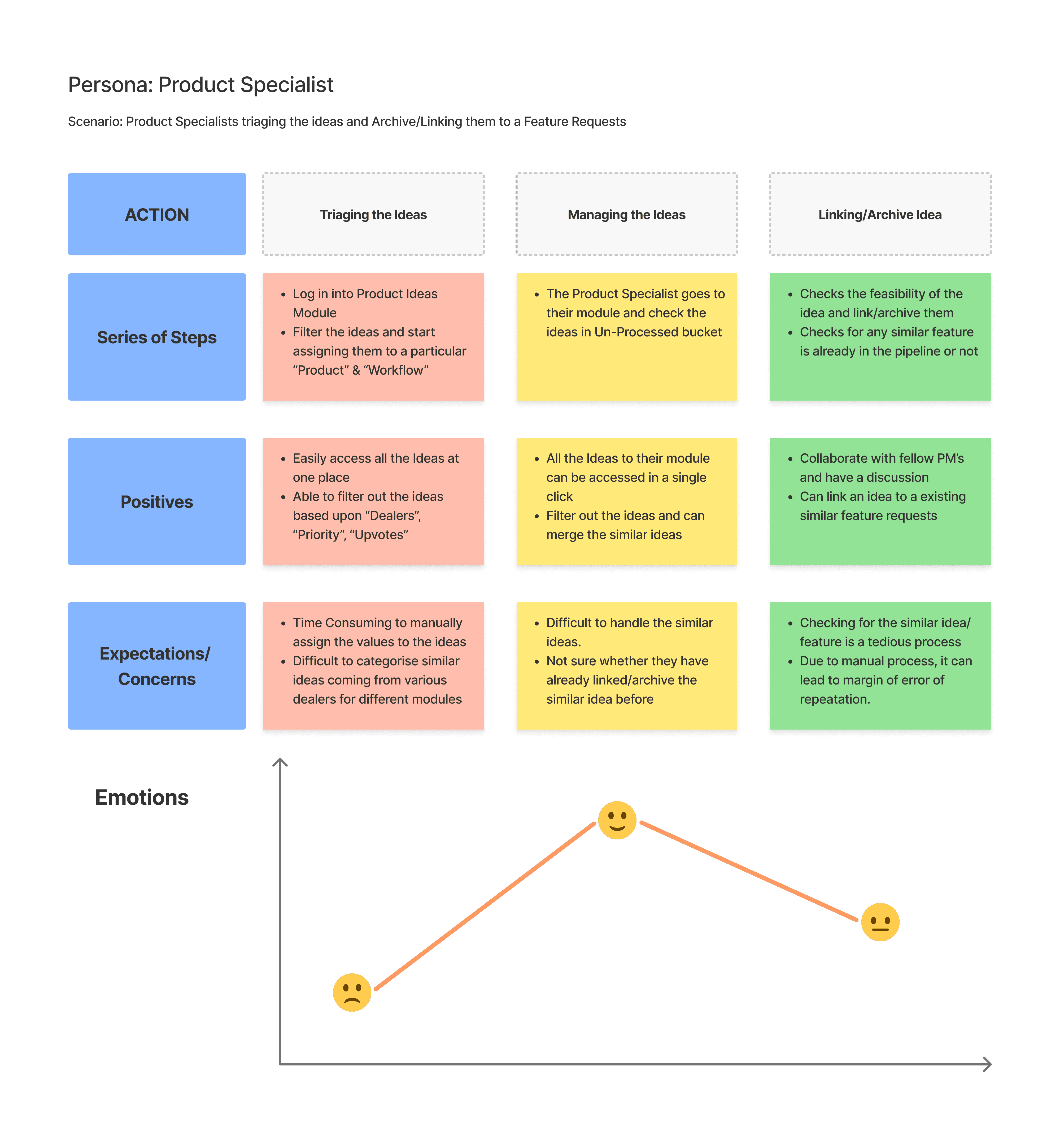
After analyzing the Product Specialist’s workflow for triaging and managing ideas, it became clear that automation is needed to simplify the process and reduce errors.
After analyzing the Product Specialist’s workflow for triaging and managing ideas, it became clear that automation is needed to simplify the process and reduce errors.
🧐 HMW's: Identifying Opportunities for Improvement
🧐 HMW's: Identifying Opportunities for Improvement
Based on the concerns captured from the journey map, it’s crucial to work on "How Might We" (HMW) statements to improve the effectiveness of our idea management process. By reframing these issues, we can foster creative solutions that not only address our current obstacles but also enhance collaboration and efficiency moving forward.
Based on the concerns captured from the journey map, it’s crucial to work on "How Might We" (HMW) statements to improve the effectiveness of our idea management process. By reframing these issues, we can foster creative solutions that not only address our current obstacles but also enhance collaboration and efficiency moving forward.
Here are the key problem areas converted into HMW statements:
Here are the key problem areas converted into HMW statements:
How might we automate the triaging process to ensure ideas are assigned to the correct product and SKU, making them visible on the relevant Product Specialist’s dashboard?
How might we automate the triaging process to ensure ideas are assigned to the correct product and SKU, making them visible on the relevant Product Specialist’s dashboard?
How might we streamline the duplicate checking process to efficiently identify similar ideas submitted by the same or different dealers, reducing redundancy and improving clarity?
How might we streamline the duplicate checking process to efficiently identify similar ideas submitted by the same or different dealers, reducing redundancy and improving clarity?
How might we implement a verification system to quickly determine if a feature request already exists, preventing unnecessary duplication of effort in creating new requests?
How might we implement a verification system to quickly determine if a feature request already exists, preventing unnecessary duplication of effort in creating new requests?
✨ AI Integration: Streamlining the Process
✨ AI Integration: Streamlining the Process
To address the challenges faced by Product Specialists in managing ideas, the integration of AI has been instrumental in improving efficiency and reducing manual effort.
To address the challenges faced by Product Specialists in managing ideas, the integration of AI has been instrumental in improving efficiency and reducing manual effort.
The objective was to ensure the solution was aligned with user needs and the anticipated high volume of ideas from dealership users.
The objective was to ensure the solution was aligned with user needs and the anticipated high volume of ideas from dealership users.
With this, we have successfully removed the manual work and process done before by adding the AI layer to the User’s side and Product Specialist side
With this, we have successfully removed the manual work and process done before by adding the AI layer to the User’s side and Product Specialist side
Here’s how AI enhances the “Product Idea” module:
Here’s how AI enhances the “Product Idea” module:
At Dealer's End:
At Dealer's End:

Automated Similar Idea Suggestions: When users submit a product idea, the system automatically checks for similar ideas submitted by either the same or other dealers. If a match is found, the user is notified immediately, helping to avoid duplication.
Automated Similar Idea Suggestions: When users submit a product idea, the system automatically checks for similar ideas submitted by either the same or other dealers. If a match is found, the user is notified immediately, helping to avoid duplication.
Existing Feature Awareness: If the idea already exists as a feature that the user is unaware of, the system educates them by providing relevant knowledge base articles, ensuring users are well-informed without needing manual intervention.
Existing Feature Awareness: If the idea already exists as a feature that the user is unaware of, the system educates them by providing relevant knowledge base articles, ensuring users are well-informed without needing manual intervention.
At Product Team End:
At Product Team End:

Automated Idea Triaging: AI automatically assigns ideas to the correct product and SKU, ensuring they appear in the relevant Product Specialist’s dashboard and eliminating manual assignment errors.
Automated Idea Triaging: AI automatically assigns ideas to the correct product and SKU, ensuring they appear in the relevant Product Specialist’s dashboard and eliminating manual assignment errors.
Duplicate Idea Detection: AI identifies similar or redundant ideas across all dealers, alerting Product Specialists to group and consolidate them, significantly reducing the need for manual checking.
Duplicate Idea Detection: AI identifies similar or redundant ideas across all dealers, alerting Product Specialists to group and consolidate them, significantly reducing the need for manual checking.
Existing Feature Request Check: AI cross-references submitted ideas with existing feature requests, notifying Product Specialists if the idea has already been addressed, streamlining the review process, and avoiding unnecessary duplication.
Existing Feature Request Check: AI cross-references submitted ideas with existing feature requests, notifying Product Specialists if the idea has already been addressed, streamlining the review process, and avoiding unnecessary duplication.
Smart Categorization and Assignment: AI categorizes ideas based on type, feasibility, and impact, then assigns them to the appropriate Product Specialist, reducing the workload and speeding up the triaging process.
Smart Categorization and Assignment: AI categorizes ideas based on type, feasibility, and impact, then assigns them to the appropriate Product Specialist, reducing the workload and speeding up the triaging process.
⚙️ KPIs — Measuring Success Post-Implementation
⚙️ KPIs — Measuring Success Post-Implementation
Measuring the success of the “Product Idea” module is crucial to understanding its impact on Tekion’s product management process.
Measuring the success of the “Product Idea” module is crucial to understanding its impact on Tekion’s product management process.
These KPIs will highlight improvements in efficiency, user engagement, and overall workflow, helping ensure the module delivers value and drives continuous optimization.
These KPIs will highlight improvements in efficiency, user engagement, and overall workflow, helping ensure the module delivers value and drives continuous optimization.
Idea Submission Rate: Measure the number of product ideas submitted by users dealer users, and internal teams over time to gauge engagement.
Idea Submission Rate: Measure the number of product ideas submitted by users dealer users, and internal teams over time to gauge engagement.
Duplicate Idea Reduction: Track the percentage of duplicate ideas flagged and consolidated by the system, highlighting the effectiveness of AI in streamlining idea management.
Duplicate Idea Reduction: Track the percentage of duplicate ideas flagged and consolidated by the system, highlighting the effectiveness of AI in streamlining idea management.
Idea to Feature Conversion Rate: Monitor how many submitted product ideas are converted into actionable feature requests, giving insight into the quality and relevance of the ideas being proposed.
Idea to Feature Conversion Rate: Monitor how many submitted product ideas are converted into actionable feature requests, giving insight into the quality and relevance of the ideas being proposed.
Idea Processing Time: Measure the time it takes from idea submission to review, categorization, and either approval, rejection, or archiving. Faster processing times would indicate increased efficiency.
Idea Processing Time: Measure the time it takes from idea submission to review, categorization, and either approval, rejection, or archiving. Faster processing times would indicate increased efficiency.
User Satisfaction Rate: Gather feedback from users (e.g., product specialists, dealers) regarding their experience with the “Product Idea” module, ensuring the tool meets their needs and improves workflow.
User Satisfaction Rate: Gather feedback from users (e.g., product specialists, dealers) regarding their experience with the “Product Idea” module, ensuring the tool meets their needs and improves workflow.
Feature Request Backlog Reduction: Track the reduction of the feature request backlog over time, particularly the impact of better categorization and triaging through the module
Feature Request Backlog Reduction: Track the reduction of the feature request backlog over time, particularly the impact of better categorization and triaging through the module
🔎 Conclusion and Summary of Findings
🔎 Conclusion and Summary of Findings
In conclusion, the development of the "Product Idea" module marks a pivotal advancement in enhancing collaboration between dealership users and the product team at Tekion. By addressing key pain points identified through user research, we have established a structured approach to managing ideas and feature requests that aligns with user needs and business goals.
In conclusion, the development of the "Product Idea" module marks a pivotal advancement in enhancing collaboration between dealership users and the product team at Tekion. By addressing key pain points identified through user research, we have established a structured approach to managing ideas and feature requests that aligns with user needs and business goals.
This case study highlighted the significance of effective triaging, duplicate checking, and feature request verification, underscoring the need for a streamlined process that encourages innovation. The "How Might We" statements provide a foundation for future enhancements, focusing on automation and collaboration to optimize the idea management workflow.
This case study highlighted the significance of effective triaging, duplicate checking, and feature request verification, underscoring the need for a streamlined process that encourages innovation. The "How Might We" statements provide a foundation for future enhancements, focusing on automation and collaboration to optimize the idea management workflow.
Ultimately, the successful implementation of the "Product Idea" module will empower users to share valuable insights and enable the product team to make informed decisions that drive Tekion's growth and enhance customer experience. Moving forward, continuous feedback and iteration will be essential in refining this solution to meet the evolving needs of our users and the market.
Ultimately, the successful implementation of the "Product Idea" module will empower users to share valuable insights and enable the product team to make informed decisions that drive Tekion's growth and enhance customer experience. Moving forward, continuous feedback and iteration will be essential in refining this solution to meet the evolving needs of our users and the market.
🙏🏻 Thanks for checking out this case study! I hope you found it helpful. If you have any questions or thoughts, feel free to reach out. Appreciate your time!
🙏🏻 Thanks for checking out this case study! I hope you found it helpful. If you have any questions or thoughts, feel free to reach out. Appreciate your time!
👀 Other Tekion's work
👀 Other Tekion's work
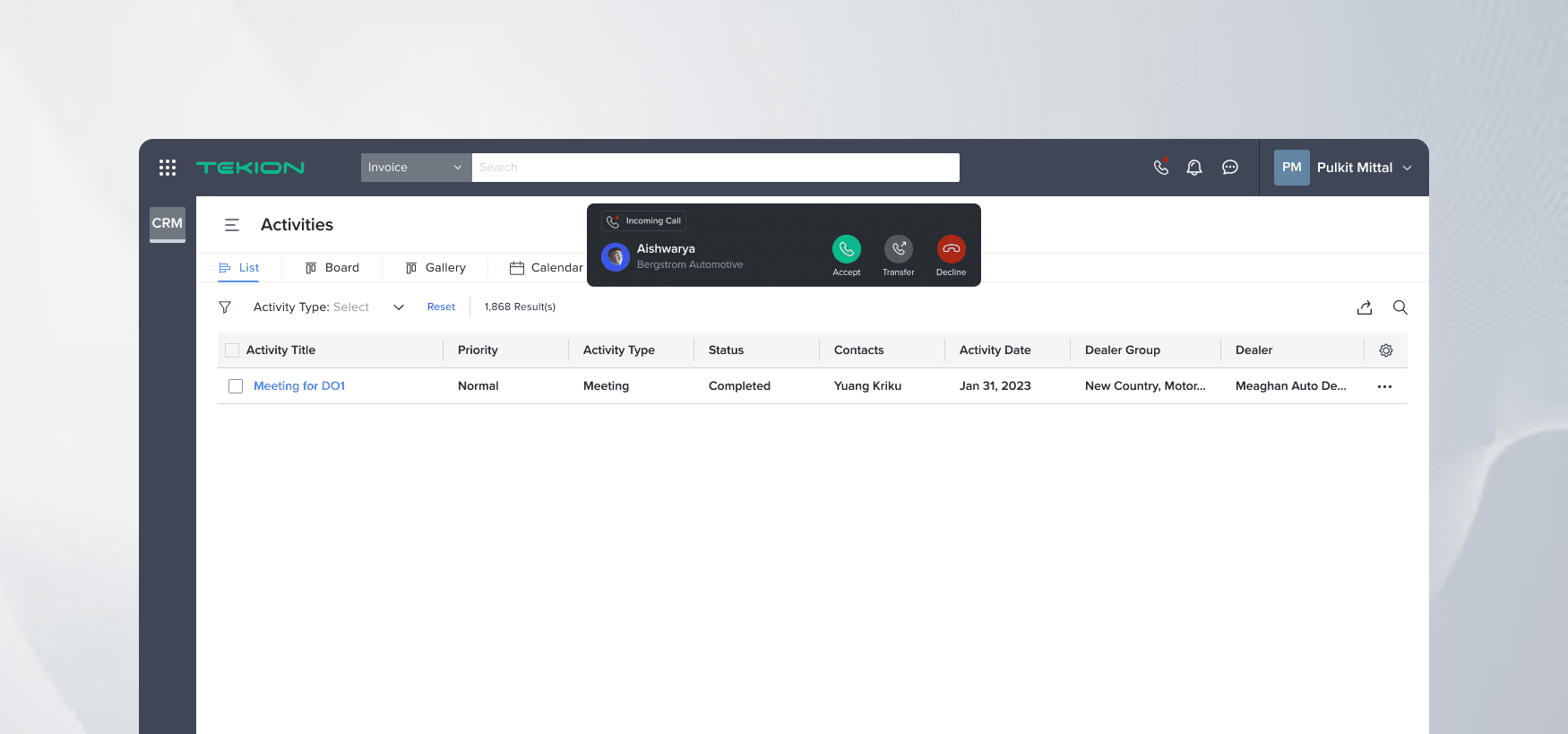
Building a Automated Calling flow between the Tekion & Dealerships
Building a Automated Calling flow between the Tekion & Dealerships
This case study explores how automating the calling process between Tekion and car dealerships streamlined onboarding, reduced missed calls, and elevated dealership satisfaction, making interactions more efficient and responsive.
This case study explores how automating the calling process between Tekion and car dealerships streamlined onboarding, reduced missed calls, and elevated dealership satisfaction, making interactions more efficient and responsive.
Read Case Study
Read Case Study
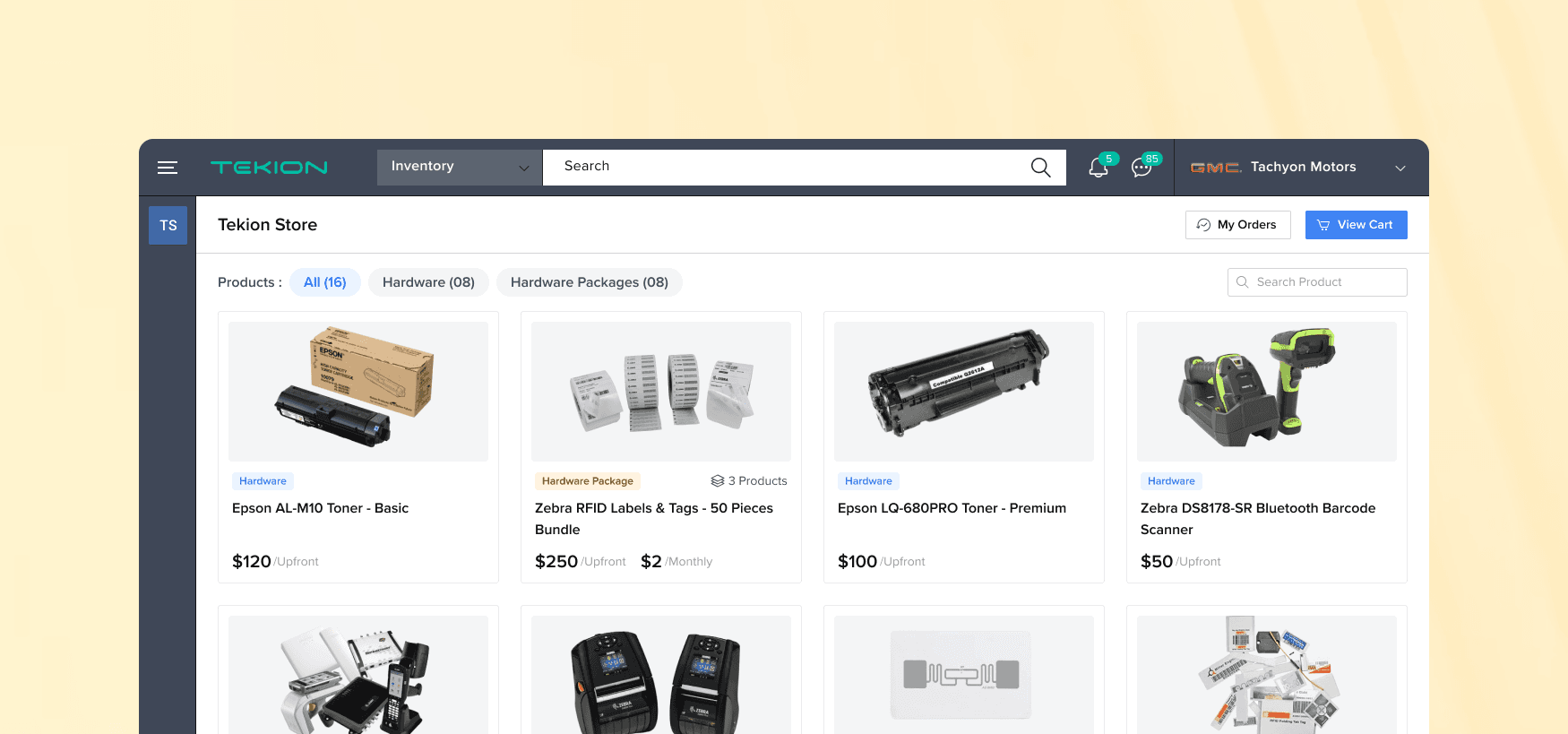
Building Tekion Store, an B2B E-Commerce Platform
Building Tekion Store, an B2B E-Commerce Platform
Building the Tekion first B2B E-commerce store where the car dealerships can buy different range of products Tekion offers. Currently the buying process was completely manual with a lot of mediators in between.
Building the Tekion first B2B E-commerce store where the car dealerships can buy different range of products Tekion offers. Currently the buying process was completely manual with a lot of mediators in between.
Read Case Study
Read Case Study